

About the Project
Food insecurity is not a supply problem. It's a system problem — one where the people most affected have the least power over the conditions driving it – that understanding reoriented everything about how I approached this engagement.
The brief was to conceive and validate a digital marketplace that could shift the balance — moving communities from dependence on food assistance toward economic agency, by connecting beneficiaries, farmers and sellers through aggregate demand and transparent pricing. Eight weeks. A constrained budget. And limited direct access to the people the solution was designed to serve.
What I couldn't anticipate was how profoundly the work would change me.
The Challenge
To realise their mission to end hunger, the organisation is undergoing an evolution in how they approach providing aid to beneficiaries, beyond food assistance during the initial emergency situation – flooding the market with free food, while necessary, has the adverse impact of destabilising the local economies and businesses already operating in the region – to supporting businesses, farmers and local communities build infrastructure which can lead to longer term sustainability and self-sufficiency.
Our objective was to engage with subject matter experts and aid workers across the organisation to leverage their vast in-the-field knowledge and experience to explore ideas and opportunities to address these challenges, assessing the viability of developing a new concept; a digital Market Place solution. The ambitious solution aims to create a secure, trusted, and accessible hub to manage the full lifecycle of the physical marketplace digitally, enabling farmers to connect directly to markets and beneficiaries to increase the size of the addressable market, supporting bulk purchasing to meet aggregated beneficiary demand, connecting individuals to transportation services, while supporting the transaction of goods, between farmers, sellers, beneficiaries and customers in unrestricted cash context.
With such a challenging brief, tight timelines, limited budget and difficulties accessing the ultimate beneficiaries of the solution our proposal demanded we develop concepts upfront, alongside the SMEs, acting as proxies to shape a viable solution to secure further investment. While the approach runs counter to my human centred principles, the constraints demanded I adapt, forcing me to question every input, challenge assumptions, guard against bias and push beyond empathy to focus on how a digital solution can support and address the very human dynamics of the marketplace.
Understanding sets the foundation
To ground our efforts, create alignment and synergy with our client, the team travelled to the HQ in Rome, running two-days of intensive workshops with leadership, stakeholders and in the field aid workers, brought together to support the initiative. Working in partnership with our BA, Richard Fort, I co-led sessions designed to rapidly immerse all stakeholders in the opportunity space. Over a series of focused activities we worked to create a baseline foundation, facilitating knowledge transfer from stakeholders to understand the various actors directly involved – beneficiaries, farmers, sellers and the organisation themselves – while exploring the wider ecosystem including finance, transportation, wholesalers, schools, the community and more.
From the outset it was clear to me that the ambitions of the client were broad, while the factors influencing our efforts required intentional design, and careful management of the unavoidable tradeoffs necessary, if we were to create the change we all desired.
With so much complexity, and limited capacity, I narrowed the focus, based on the insights captured across earlier sessions I proposed the group focus on the primary audience, essential to drive the engagement necessary for adoption of the solution, the beneficiaries.
Leading requirement gathering and design studio sessions, I made a conscious effort to accommodate broader conversations, capture inputs for adjacent considerations impacting the beneficiaries to support further investigation, while reorienting the group to focus our efforts on addressing the needs of the most critical actors, without whom the rest would not matter.
The client provided a big challenge, ambition and commitment to tackle a fundamental human need, food security. I proposed refocusing the client's initial feature priorities with a single orienting question — one that centred the programme's ambition on beneficiary outcomes to inform product capabilities. Achieving alignment across leadership, stakeholders and field operations on that reframe was the first significant act of strategic persuasion in the engagement.
North Star
How might we connect Cash Based Transfer recipients, traders and producers in order to maximise value for all?
Objectives
01
Improve access and purchasing power
Increase price transparency to offer more product variety, lower prices and higher quality through aggregate demand
02
Improve cost structures
Lower operational cost by changing the cost structures of business.
03
Boost local producers and traders
Increase visibility for producers and traders to expand market opportunities beyond ‘local walking distance’.
04
Support communities
Increase social/community integration and cohesion.






Key beneficiary use case flows
The beneficiary experience centred around 3 core flows, Registration and discovery, aggregate demand and seller discovery.
Refined Design Studio Concepts
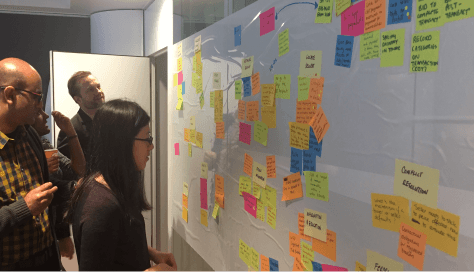
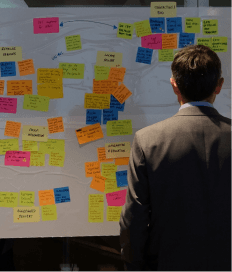
To explore the concept I developed the strongest ideas shared during the design studio session into low fidelity screens, leveraging post-it notes to create physical prototype functionality to explore and test ideas rapidly, gather feedback and iterate. The flexibility of the medium allowed for richer stakeholder feedback, focused on the core functionality and usability of the system over more polished wireframes or designs.
The concepts informed key decisions on the experience, enabling healthy debate to drive through product decisions and requirements.


Identifying the main actors
Working in partnership with the SMEs during the workshop, and later updated following contextual enquiry, the persona archetypes allowed the group thinking and problem solving to incorporate the diverse needs of very different actors within the system, providing a continuous reference point to assess our early concept efforts against in liu of direct access to the groups.
The personas directly shaped the core product use cases, surfacing high priority needs, perspectives, influences and aspirations which directly informed the product strategy.
Story Mapping
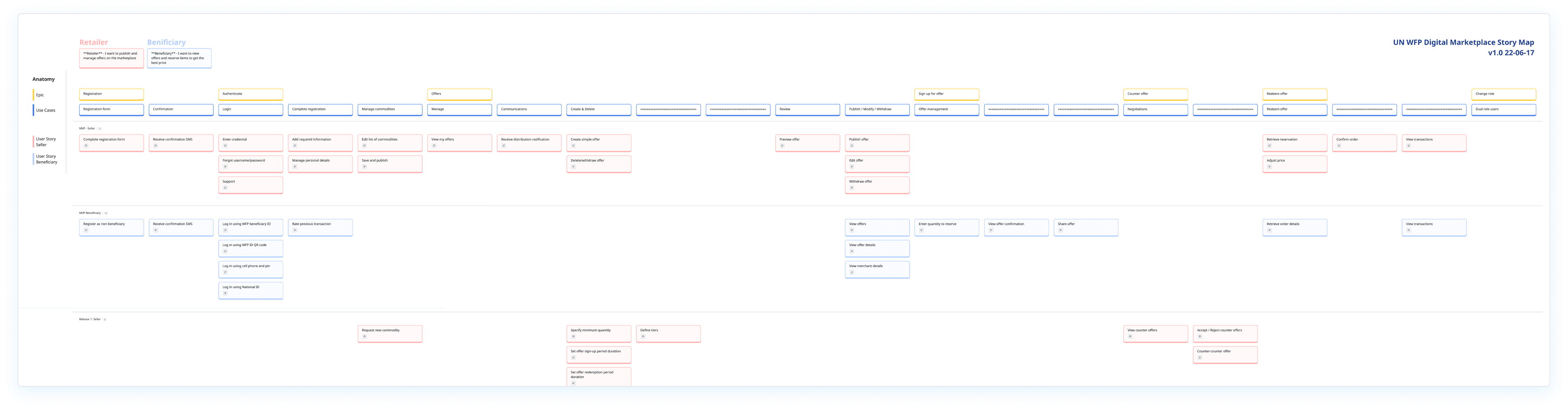
Supporting the foundational stages of the project I co-created the product Story map. Its lightweight format supports deeper understanding, alignment and interactions, across all stakeholders.
The story map supports conversations around the complexity of the proposed marketplace, technical requirements, scope, dependencies and release planning, to ensure everyone is on the same page. It provides a picture of the end-to-end solution, the primary actors, stories and elements required to realise the first release.
Focus on what truly matters
As I set about the task of shaping the solution, untangling the interconnected nature of creating a marketplace, it was clear to me that the real obstacle I had to overcome was not in my ability to craft a digital product that answered a set of requirements, it was creating behaviour change in the users of the system, for which I would need to push outside of my comfort zone and develop new capabilities on the job. To address blindspots in my experience and knowledge dependency I arranged frequent collaboration touch points, through bi-weekly and ad hoc checkins with key contributors to co-design the proposal through rapid iteration cycles, validating progress early and often, helping surface assumptions, uncover challenges and inform my thinking, maintaining positive momentum.
Through every interactions with passionate stakeholders, understanding their first-hand experience in the field, taking on board the knowledge, insights and pushbacks, my own understanding of and empathy for the realities of those I was designing for led me to a realisation that in hindsight might seem obvious, for behaviour change to take root – be it an organisation, aid worker, seller, farmer or beneficiary – the fundamental catalyst is the same, Trust! Above all else this would be the criteria that would determine viability and success.
That insight sharpened my focus, leading me to explore the mechanics necessary to build and embed trust into a digital service. The reality I came to appreciate is that trust is extremely fragile, it takes consistent, deliberate effort and reinforcement to gain, yet can be lost in an instant. For the marketplace this meant looking at every element, interaction and decision to create the conditions for trust to take hold.
Trust Empowers Change
Leveraging design techniques to build a foundation, embedding visual communication and cues: images, icons and landmarks, instantly familiar and easy to learn without having to rely on copy alone. Employing large, accessible interface controls, supporting the low resolution smartphone devices available, while reducing the need for dexterity and accuracy to build confidence in users ability to engage with the solution. Supporting auditory inputs, alongside visual and copy techniques to address the broad range of spoken dialects, allowing for multi-modal interactions to aid comprehension. Limiting customisation and promoting pattern reuse aligned to Android material design: Cards, modals, interface controls, collections and lists to support learning and complement existing mental models.
Building in social mechanisms to address trust and support engagement: through access to transparent pricing data, empowering buyers to seek out the best value and challenge sellers who overcharge. Requiring users to register with names (last and first) alongside a current photo to reflect the community and provide reassurance to others. Providing choice, to purchase directly, join or create transparent public and private groups, share offers within personal social groups to increase confidence and commitment. Enabling control and agency over transactions, through evidence to support redemption and resolve conflicts alongside a trust based system allowing beneficiaries to rate sellers, boost the good and warn others against the bad – each element building on and supporting the other, designed to earn the trust of beneficiaries.
The solution I proposed secured the confidence of our sponsors and stakeholders, eager to move forwards with the build and expansion of additional features and use cases for the other actors they had identified during our discovery sessions. While I had confidence in the rigour and quality of the concept the lack of direct access to the actual end users gave me pause for concern, leading to a negotiation with the client on how best to proceed.
Visibility of fair market price supports negotiating the best deal and holding sellers accountable.
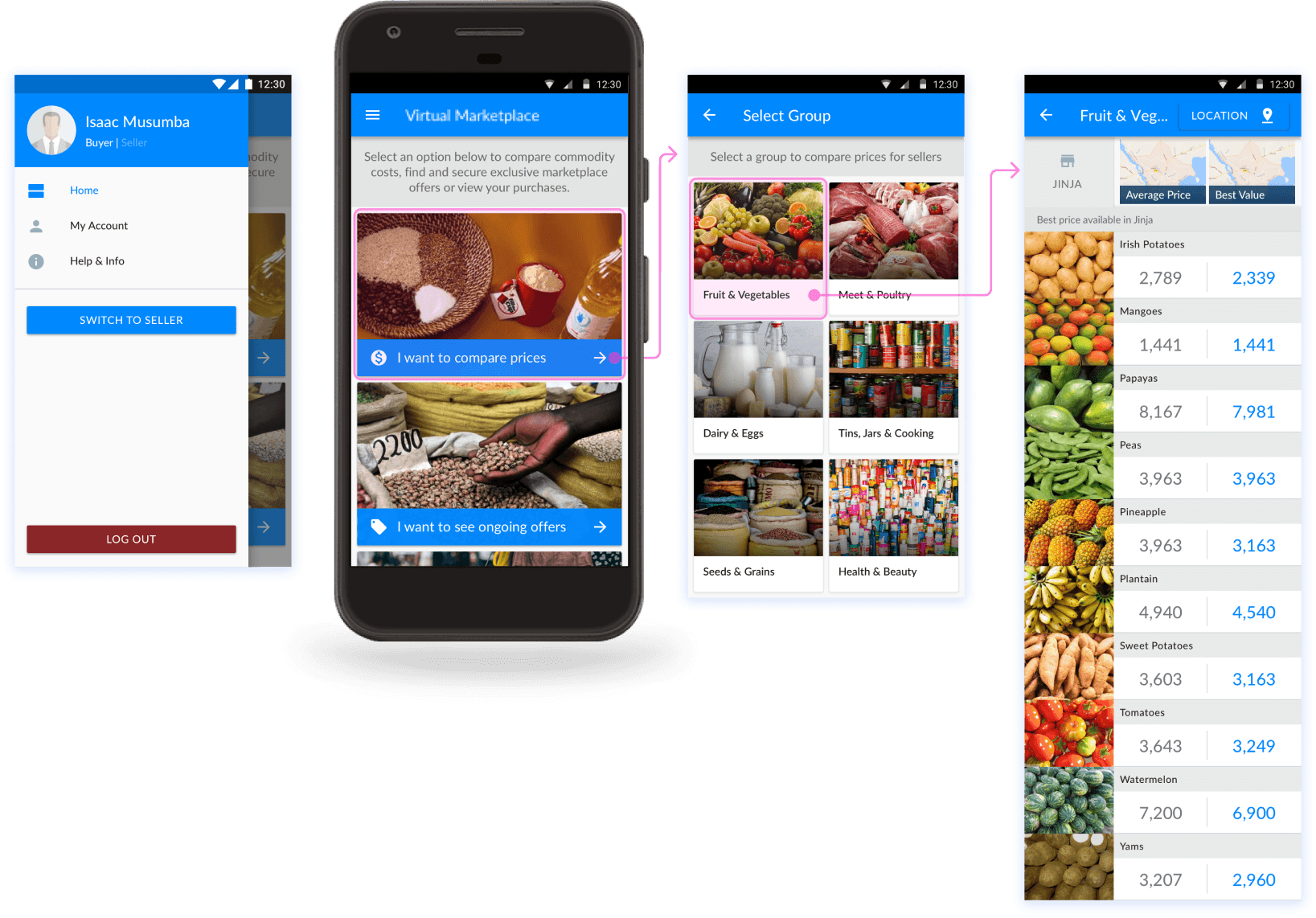
Offers provide beneficiaries and organisations the opportunity to make use of aggregate demand to secure better value.

Beneficiaries drive demand and increase value by creating or joining groups, maximising purchasing power.

Beneficiaries drive engagement through their community network, promote offers of good sellers to drive trust within the system.

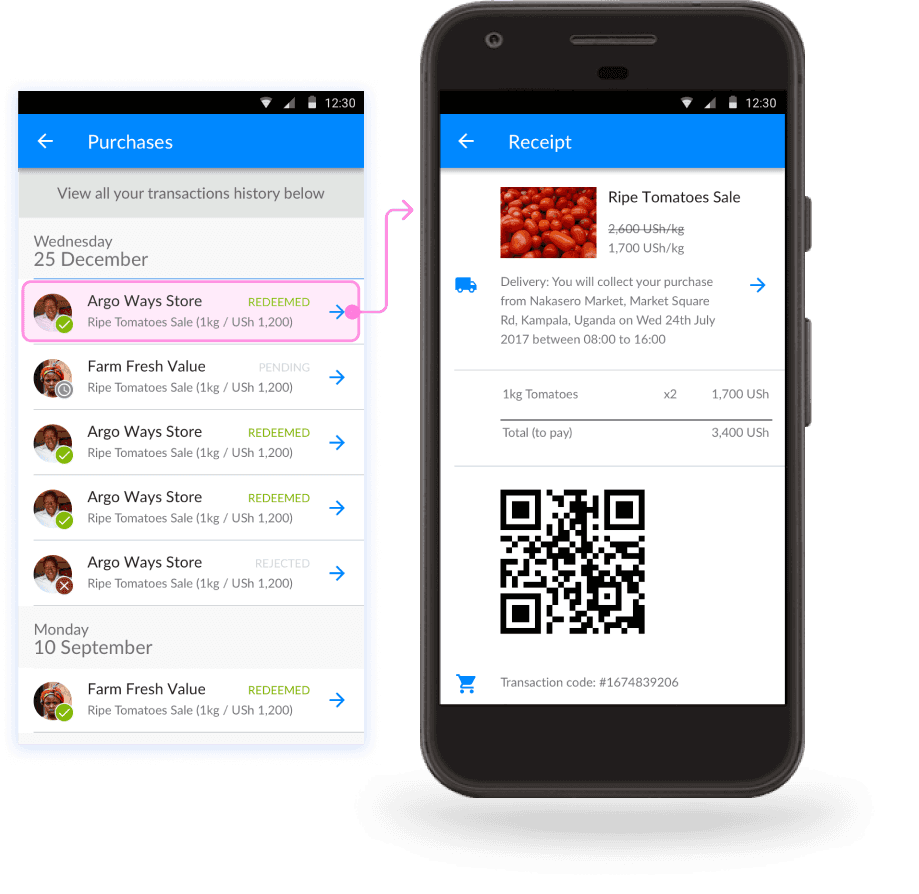
Purchase records support sellers and buyers exchange goods
First contact with reality
Due to the inside out strategy employed, our efforts to craft a viable solution for the market place, while based on genuine empathy, our best efforts to effectively anticipate needs, constraints, barriers and drivers carried a genuine risk of false confidence that I was keen to validate, prior to investing further efforts to build out the solution. From experience I knew the reality, to meet the demands of a system this complex, an outside in perspective was crucial. Testing and validating our concepts on the ground, with perspective users would expose gaps in our logic, misinformed assumptions and surface the real world use cases that are otherwise impossible to anticipate. Through discussions with the client, I proposed and secured approval to conduct in the field research – to gain first hand insights, engage with all affected parties directly, test the concepts and inform subsequent iterations – prior to committing to a solution that on paper met the brief but carried a real risk of failing to deliver the impact on first contact with the real world.
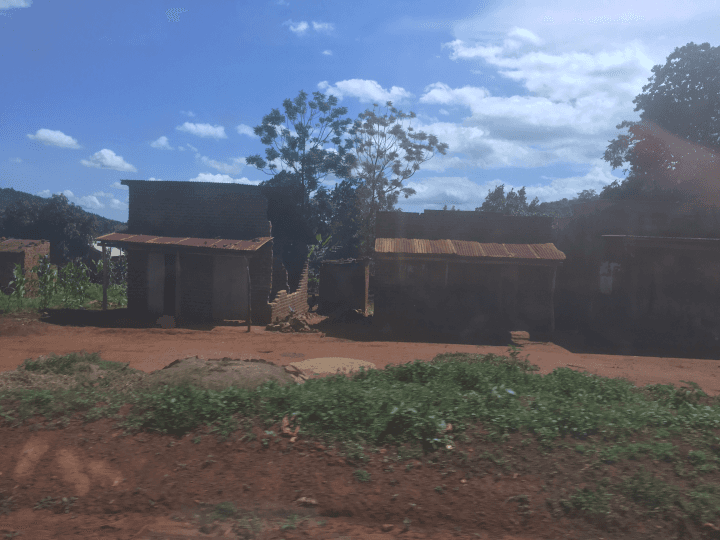
I planned and led an ethnographic research engagement in Uganda, supported by my colleague Rosalie, undertaking a week long investigation. A 5+ hour drive from Entebbe International Airport through farmlands, metropolitan areas, villages and rugged back roads to our base in Jinja at the mouth of the Nile, offered a unique opportunity to truly experience the country and acclimatise, forcing me to question my current perspectives about the culture, country and people. Once at our base we conducted stakeholder interviews with regional aid workers, Jairus a former farmer and Michelle from the Nairobi office, to take on board their local and regional knowledge of conditions on the ground and perspectives on the concept prototype.
Over several days we visited three locations – remote farmers village, central Jinja and Dahlias Road (a local market) – conducting informal interviews with 9 retailers and wholesalers during trading hours, with the support of our translator Edward and his colleague, to understand key themes around the landscape, tech use and literacy, business practices, pricing and the appetite for offering discounts or leveraging a digital solution. Each location highlighting the significant variance on the ground, from limited choice and direct relationships in the farmers village to variety, competition and competitive pricing for customers at market, to well stocked businesses in Jinja offering western brands, bulk purchasing and conducting business from brick built stores, using low end smartphones.


Beneficiary Feedback
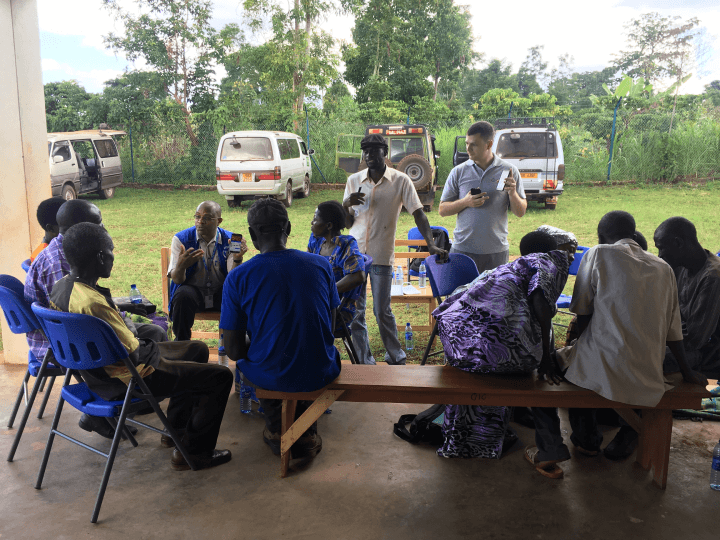
Between our field research we met with 10 beneficiaries during a registration simulation exercise at a collection point in Butagaya, providing an opportunity to gather first hand insights into their day-to-day reality, understand their needs, challenges and aspirations alongside gathering direct feedback on the suitability of the concepts to meet their needs. This proved the most influential insights of the research for understanding not only the individuals, but the wider environment, as they were the most acutely impacted of the groups we engaged with.
Initially a group session with all beneficiaries allowed us to gather some baseline data, form a rapport and build trust, with language and technical literacy proving initial barriers. With the aid of our translator Edward, I guided them through the testing, explaining the concepts, walking through each screen and addressing questions, before allowing them to explore the solution independently. To gather deeper insights, I conducted a small session with two women who felt comfortable to discuss in more detail, supported by Edward they clarified some of the questions raised earlier and provided valuable feedback on where the concept appealed and the challenges they, and others in the group would face to adopt it.





Validation... and Challenges
Together the research served to validate the appetite for the solution, with all parties – beneficiaries, farmers, store owners and wholesalers – receptive, seeing clear value in the proposition, demonstrating a willingness to adopt and learn the system to addressing their needs.
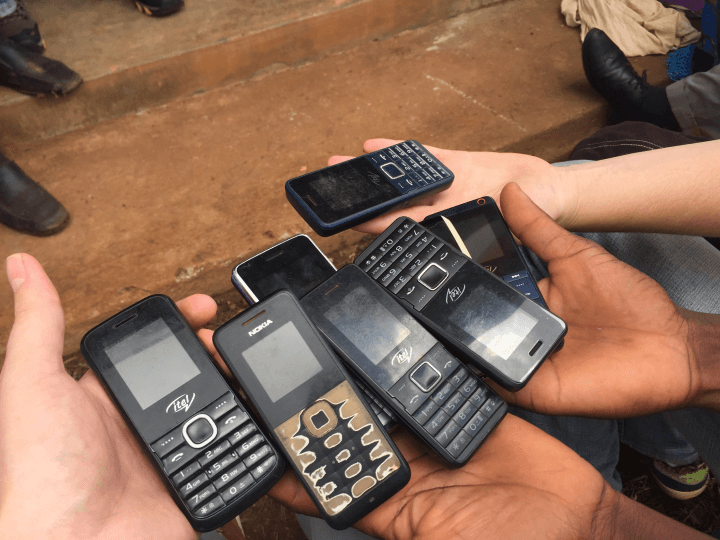
The underlying concept represented a strong candidate, however further work would be necessary to address a number of significant barriers surfaced, chief amongst them being access to smartphones due to relatively high cost of ownership meaning the majority of beneficiaries owned basic Nokia and itel brand feature phones, presenting a new challenge around access to the service alongside technical literacy to use the devices effectively. Further challenges identified included the role of children, often better educated, in supporting adults to leverage technology, while relationships dynamics, with both community leaders – holding a position of trust to act in the interests of others – and the sellers in local communities – providing credit to manage finances during harder times – added to the dynamics at play. Additionally the threat posed by ‘middlemen’ would need to be considered and where possible addressed.
The foundations of a digital marketplace
While the field research provided validation for the underlying concept, and a clear appetite from all parties for a solution to manage the dynamic ecosystem of the marketplace, the first hand realisation of just how many factors, direct and indirect, influenced access, engagement and trust in the system forced me to rethink how to make the solution viable. Beyond earning trust, two key factors were crystal clear. First, without beneficiary access to a smartphone the marketplace would be a non starter, regardless of appetite, this was a fundamental barrier to engagement. Second, the shadow of middlemen who monopolise the physical marketplace, leveraging the digital solution as an extension of their current practices, would undermine our efforts, instantly destroying trust and exacerbating the situation further. In addition the organisation wasn’t in a position to manage the marketplace, it had to primarily be self regulating for capacity, logistic and trust based reasons. Analysis of the research hinted at potential solutions, tackling each aspect in turn I set about the task.
First, the elephant in the room, beneficiaries access to smartphones would need to be tackled through a combination of the organisations external efforts and the marketplace system. I led on site discussions and workshop sessions with key stakeholders, identifying options that could not just help address access but support adoption. Empowering community leaders – already trusted representatives, who play a crucial role in physical marketplace dynamics, acting in a communities best interests – by providing a device and training, could manage the marketplace app, assisting and educate those with restricted access to place and redeem orders, create and manage groups and act as mediators should disputes arise, augmenting rather than replacing existing community dynamics. While not without risk, the approach received support, representing a realistic, viable approach to overcome many of the short term constraints while allowing time for the penetration of low priced, capable smartphones to reach market saturation.
A Fairer Marketplace
Next I turned my attention to the middlemen and cartels who, within the physical marketplace, unfairly reap the benefits at the expense of other actors in the system. Here the potential of a digital marketplace could make the greatest impact, removing the middleman dynamic, promoting access to and healthy competition between sellers to attract beneficiaries. Having previously worked on designing a retailer and beneficiary registration system for the organisation, I’d helped build the underlying infrastructure necessary to manage access control for non beneficiaries. The challenge for the digital marketplace was both providing the tools for sellers and wholesalers to manage their operations digitally, alongside the mechanics to hold all parties accountable to create a virtuous cycle. Partnering with my colleague Ryan Copland, we designed the seller solution: onboarding flows to walk through the setup and management of storefronts, creation and management of offers – contact, discounts, promotion, drafts and publishing – transactional tools for facilitating commerce, tracking interest and volumes, redemption, sales history and visibility of reliable/unreliable beneficiaries to offer peace of mind and reinforce the benefits of the system.
Access restricted to registered (vetted) sellers. Onboarding flow supports guided setup and enforces constraints on the sellers to participate.

Managing sales directly through the app supports sellers. Additional benefits for the organisation to track price and volumes alongside issue resolution.

Managing sales directly through the app supports sellers. Additional benefits for the organisation to track price and volumes, monitor quality alongside issue resolution.
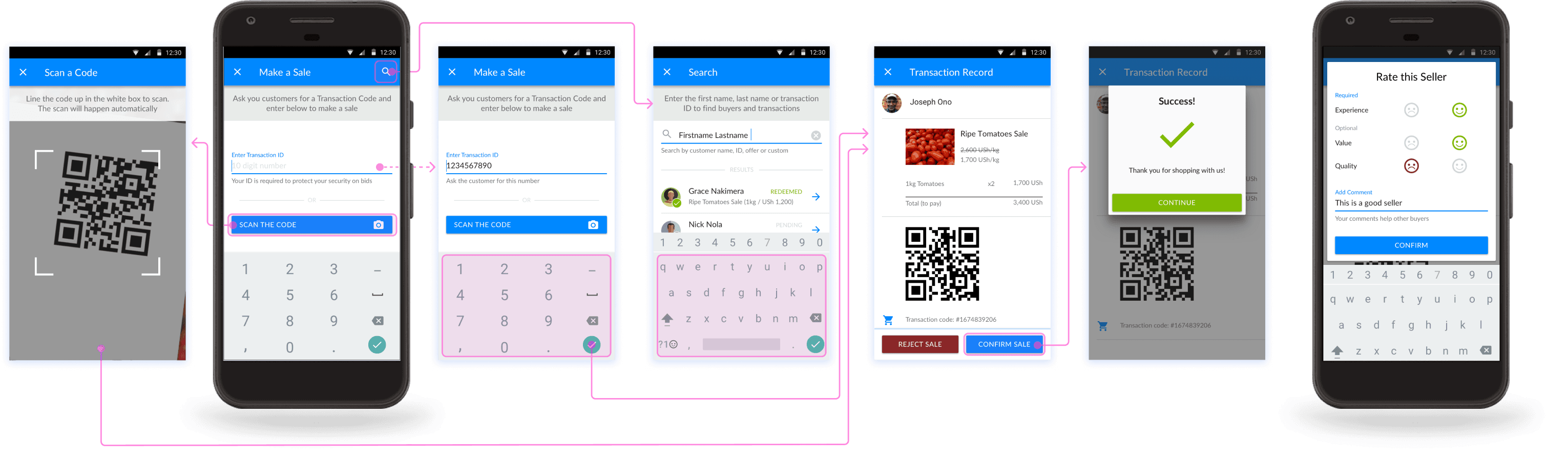
Together, alongside the iterations of the beneficiary experience to enhance the sense of community, access and agency, the digital marketplace took the constraints of the real world system, leveraging the human dynamics at play to create a digital twin. In the process many of the challenges were reframed as strengths, complementary to the existing marketplace, while addressing a number of the negative aspects and limitations inherent in the physical systems.
Outcomes & Impact
Field validation confirmed genuine appetite from all parties — beneficiaries, farmers, retailers and wholesalers — for a solution that could address pricing transparency, market access and economic agency. The concept demonstrated that digital infrastructure could work with, rather than against, the trust dynamics and community structures already operating in the market.
The concept validated the demand for a digital marketplace solution in the target market, identifying the levers, constraints and dependencies of the system.
Our client stakeholders leveraged the outcomes to showcase viability within the organisation, identifying complementary efforts, expanding the potential utility beyond the initial target market.
The efforts secured approval and further funding to move forwards with the programme (via a retained client development agency).
The engagement's success strengthened my organisation’s reputation for tackling complex, human centred challenges at scale, supporting account growth and additional client engagements.
Reflections
I came into this engagement with a clear image of myself — what I knew, what I could contribute, and what I understood about the people I was designing for. I was wrong on most of it. My outside perspective assumed people made poor choices, in reality they made the only choice available to them. The market I'd imagined as underdeveloped was in fact deeply sophisticated — structured around trust, community relationships and informal economies that no digital product could replace, only work within. That correction didn't happen at a desk. It happened in a market in Jinja, in a conversation with two women who stayed after the group session to tell me things they hadn't said in front of the others. This project didn't just change what I designed. It changed how I see.
The leadership challenge that surprised me most was the cost of designing without direct access to the people you're designing for. The inside-out approach — developing concepts through SME proxies before field validation — is a pragmatic response to real constraints, and I understood that going in. What I underestimated was how much invisible bias accumulates in that process, even with the most rigorous challenge and questioning. The field research in Uganda didn't invalidate the concept — it fundamentally deepened it. The smartphone access problem, the middleman dynamics, the role of community leaders, the significance of social trust as a design material — none of these were visible from the inside. They required presence.
What I'd do differently: I'd push harder and earlier for contextual enquiry in the field — not as a validation step after concept development, but as the foundation before it. The constraints that led us to an inside-out approach were real, but I've come to believe they were also partly a matter of framing. Had I made the case for upfront field research as a risk-reduction investment rather than a research preference, I think the client would have agreed. The richness of what we discovered in one week in Uganda would have sharpened every decision that preceded it. That's the argument I'd lead with next time.
The opportunity to contribute to an organisational mission to end hunger, perform contextual enquiry in region and shape the solution is personally more valuable than any impact metric or award throughout my career.
