

About the Project
Falling into poor credit is all too often viewed in society as black and white – a result of poor financial literacy or poor life choices – as I came to discover, the true reality is behind every low credit score lies a person held back from access and opportunity to overcome life’s setbacks. That was the truth I found at the centre of this engagement — and it challenged my own biases and shaped the vision for how we addressed it. I had assumed, as I suspect many do, that poor credit was largely a behavioural problem — something addressable through better financial education. The discovery work corrected that assumption quickly: the customers we were designing for had often made sound decisions under circumstances that left no good options. That correction mattered for the design — you can't build empathy into a product if you've misdiagnosed the person using it.
The brief was supporting a financial institution modernisation programme. What I identified was an opportunity to transform the lives of people whose story is more than a credit score, looking for a second chance. Over a multi-year consultancy engagement, I led the product strategy, design direction and delivery for large US based financial institution who views things differently — shaping its direction from discovery through to launch across iOS and Android.
The Challenge
The brief, at surface level, presented a familiar modernisation engagement: assessing the current product and competitor landscape, addressing key pain points and refreshing the brand and product experience. However, I realised early on that transformation wasn’t just about the product or service. It involved reflecting the institution’s culture and principles both internally and across every touchpoint. The true design challenge was creating the conditions for behaviour change, within the organisation and for millions of customers on their journey to rebuild their credit, their confidence and their lives.
I proposed a complete overhaul of the product experience, grounding the service in the true competitive advantage, the organisational culture, infusing the customers needs and aspirations into a supportive framework guiding the path to financial literacy. Achieving this required leading organisational change, driving how to deliver a market leading digital experience, shifting long standing “ways of doing” to allow a more responsive and customer centric approach.
The Foundations for Transformation
From my UK base, I led the product strategy engagement working alongside and directing UK and US based colleagues and partnering closely with our central US based client team. Fostering close collaboration across all work streams – spanning business, technology and user lenses – allowed the team to deeply immerse ourselves in the clients organisation and culture, explore opportunities, challenges and constraints helping to establish trust and confidence in the product vision.
My primary focus in the early phase of the engagement was building confidence and support for a ground up transformation of the digital experience, with subsequent engagements dependant on it. A task made all the more challenging within a traditional, siloed organisation making the transition to agile. Throughout 1:1 interactions with our client partners, from stakeholder interviews with the president and leadership teams to 20 year tenure customer service reps, a strong sense of culture and purpose surfaced again and again, however it was clear to me a crucial gap between siloed and collective decision making was holding the product back. Left unresolved, our ability to deliver on the ambitious goals and realise the desired impact would remain out of reach.
Alongside the challenges inherent in product and organisational change lies an opportunity to shift perspectives, I set about unlocking this through co-working strategy workshops – bringing together key decision makers within the organisation from technology, customer service, business leaders and others – to explore the opportunity space holistically and openly. Participants initial discomfort – being more accustomed to autonomy – quickly faded thanks to my structured and targeted approach, facilitating interactive exercises, candid conversations, breaking down barriers while creating a newfound appreciation of the interconnected nature of the service, fostering a sense of investment and shared ownership of the product strategy. While the subsequent efforts crystallising the product strategy built the rational for securing its adoption, these embryonic interactions played a crucial role in embedding the conditions for change. Before those sessions, product decisions were often shaped by technical constraints, with no shared view of the customer or downstream impact. By the end, the same stakeholders were co-authoring the product strategy — a shift that proved as consequential as any design decision made in the engagement.
The client arrived at the engagement with a feature list and an instinct for incremental improvement. I proposed replacing both with a single orienting question — one that positioned the organisation's ambition around customer outcomes rather than product capabilities. Getting alignment on this reframe, across technology, business and customer service leadership, was the first significant act of strategic persuasion in the engagement.
North Star
How might we reimagine our digital capabilities and mobile offerings to leverage market opportunities to meet customer demand and provide a customer experience second to none
Success Factors
01
Empower customers
Centre the app experience around empowerment, supporting customers to take ownership of their financial management.
02
Support financial outcomes
Provide the right tools, support and guidance at the right time to significantly improve the financial outcomes of customers.
03
Tactical implementation
Validate user, business and technical constraints to support effective product strategy and prioritisation.
04
Product delivery
Establish solid foundations and frameworks to achieve a market leading product and customer experience.

Product strategy
The Experience Definition Strategy, the key artefact, communicating the rigorous discovery process, evidence based insights, recommendations and human centred thinking underpinning the strategic product vision, outlining the path to realise the future state service.
I lead and crafted the narrative, document and presented the strategic vision to senior programme leadership across the institution, securing budgetary approval to move forward into product delivery, and a commitment to the long term product strategy.




Understanding the service
To understand the existing solution, the complete service journey experience was mapped allowing for a deep heuristic assessment and analysis of the existing user flows, identification of usability issues, variations based on system behaviour, technical and compliance requirements and customer account types.
The analysis informed both the Technical design and future state experience, enabling healthy debate to drive through product decisions and requirements.


Addressing human needs
Working in close partnership with the programme team, customer service reps and marketing team, incorporating customer sentiment analysis and other data sources, I led the analysis of the organisations existing customer base, developing three primary personas reflecting the diversity and challenges faced by customers not found in existing marketing profiles or available data – humanising their aspirations, behaviours and needs – to help educate programme stakeholders and reflect the complex realities associated with rebuilding finance.
The personas directly shaped the core product use cases, surfacing insights into actionable outcomes the service could support, driving the longer term product strategy.
Assessing the market
Market research spanned a broad competitive landscape including established in market players, emerging fintech competitors and alternative payment propositions. Assessing core product offerings provided the team and programme stakeholders an up-to-date perspective on banking and financial services landscape, helping to identify core features, best in class execution and better understand customer expectations. The insights directly informed both the product strategy and the solutions development influencing features, functionality and the visual language of our mobile applications.


Crafting the product direction
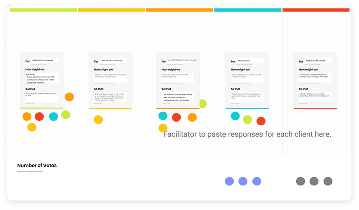
To ensure the product aligned to the brand and cultural values three concepts were produced, each emphasising different aspects, while challenging stakeholders to align on their appetite to push the boundaries in both brand and product execution. The showcase session allowed stakeholders to better articulate their vision, confronting their pragmatic views about what the organisation represents, while actively encouraging openness to push outside their comfort zone. The result was the development of a 4th concept, leveraging elements across the concepts to create the final product vision.
Story Mapping
Supporting the foundational stages of the project I co-created the product Story map. Its lightweight format supports deeper understanding, alignment and interactions, across all stakeholders.
The story map supports conversations around the complexity of the proposed marketplace, technical requirements, scope, dependencies and release planning, to ensure everyone is on the same page. It provides a picture of the end-to-end solution, the primary actors, stories and elements required to realise the first release.

Culture is the Key to Success
Our analysis identified a high volume of issues, complaints and inbound calls came from customers frustrations with the current mobile service, which didn’t reflect the qualities found elsewhere, impacting both customer sentiment and the ability of reps to support customers.
Service users
Effective support for self-service use cases related to the app
Simplify access and authentication
Provide guidance and support to manage payments
Operations
Reduce inbound calls for self service use cases relating to the app
Better tools for troubleshooting customer issues in app
Clearer communication and documentation of issues
For many customers simply accessing the app, whether as a new or existing user, was a major point of friction hampering the ability to manage payments and accounts. Aside from frequent technical issues post updates, the authentication requirements – account creation, accuracy entering credentials, navigating two-factor authentication or following in app guidance – frequently proved insurmountable, driving significant inbound call volume.
Given the first use experience plays a significant role in shaping perceptions, the existing service failed both customers and the organisation. I dedicated time to understand the various challenges – partnering with our technical lead, client SME and compliance – unpacking user feedback and mapping user flows to explore and validate viable options. I treated authentication flows as an interconnected whole, framing my efforts through our customer centric lens, asking “does this meet our customers where they are and support positive change?”.
Addressing the Foundations
On the surface the solution seemed obvious, pushing users to adopt biometric authentication to remove the friction, however through conversations with SMEs, technical teams and within the data several major obstacles surfaced. First time users relied on the primary flows to set up the app, while changes to the underlying authentication systems was not a viable option, in addition customers expressed concerns with enabling biometrics on their apps. While I had my suspicions about what was behind this behaviour and how we might address it, it was clear to me that biometrics could be part of the answer, not the answer.
To address the issues, my experience told me to focus on how to simplify the primary flows – strip away unnecessary noise, reduce cognitive load and leverage technology where possible – to reduce or remove points of potential failure. Working methodically I built a foundation through improved communication, humanising copy and removing unnecessary technical language while increasing clarity around data requirements, support and guidance to reduce error cases. Next I layered on technical enablers, leveraging (regex) field validation to guide data entry, intelligent verification credentials processing (similar to credit card issuer payment patterns), simplified two-factor authentication contact selection, while adding support for OTP auto population via SMS. Though much of the underlying system constraints remained in place, addressing the issues holistically, and resolving the pain points on the front end helped significantly reducing friction across the registration and authentication flows.


Enabling Access
To further simplify and support users preferences I returned to explore the technical viability of alternative authentication options. For many users, the benefits of simplified access, or more accurately avoiding 2FA via OTP, was appealing, however in the case of biometric authentication two factors were driving user behaviour. Firstly, as I had suspected, issues of trust played an important role in adoption, with a significant number holding incorrect beliefs on the use of biometric data. The second factor was more subtle, primarily due to the OS level implementation for enabling biometrics on the device – the modal message presented during setup suffered two major issues, first - the limited context and language lead many to reject the notification, and second - once rejected, re-triggering within the app followed a more complex setup flow, taking users out of the app and into the OS settings for users to enable, with increased friction impacting adoption.
In response to the issues identified I proposed two solutions to realise the benefits. For biometric authentication I designed a soft request, presented post setup and authentication via an app sheet style view, clearly communicating the benefits while addressing concerns around data uses, allowing the first time system notification to be reserved for intentional activation, supporting in app setup. To respect users preference a passcode alternative offered the benefits of simplified authentication in a pattern familiar to mobile users addressing concerns of data conscious customers. When I presented to stakeholders, they demonstrated their commitment to “meet customers where they are” green lighting both solutions for the app.


Making the right impression
For subprime credit customers, account application and approval is a high-stress moment on the path to better credit. Unlike standard credit decisions, this process can take up to 10 working days — and account fees, necessary to secure the credit offered, can compound the sense of isolation many in financial difficulty already feel. Recognising those human factors and designing around them was central to my approach. I championed a pivot towards proactive communication and transparency: in-app messaging and push notifications to reduce the anxiety of waiting, combined with purposeful use of the enforced delay to onboard the customer — encouraging biometric setup, eStatements, alerts, and personal information management — so that approval, when it came, landed into an account already prepared to support positive behaviour change.
Convincing a financial institution to prioritise customer welfare over immediate revenue opportunity is rarely straightforward. I made the case that transparency and support during the application window was not in tension with the business model — it was the expression of the culture we'd been building the product around. The alignment to the organisation's stated values made it a harder argument to dismiss than a purely commercial one. It was approved. That moment — of a financial institution choosing to meet a vulnerable customer with empathy rather than friction — remains one of the most satisfying design outcomes I've been part of.


Ensuring On Time Payment
Arguably the most important interaction with the app, the payment flow supports core business and customer benefits directly linked to realising a better credit score. Reducing the high friction, high cognitive load of the current experience required me to negotiate with legal, compliance and win over stakeholders apprehensive of change. A key challenge I sought to address early was the presentation of legal and compliance information across multiple steps of the flow. Rather than supporting payment, the experience felt confusing, opaque and consequential — unintentionally leading to increased uncertainty and concern, contributing to missed or late payments. Working closely with the product owner, legal and compliance I questioned every instance, proposing reduced or simplified copy, challenging how and where the information is presented – on every payment vs first-time and then accessible, upfront or inline, active vs passive, full vs partial disclosure – exploring opportunities to optimise while remaining compliant. Every push back I reframed as a design question, iterating on earlier proposals to address the specific concerns while reducing or removing friction. My determination proved successful: the per payment legal wall of text was presented on first payment only, subsequently replaced by a summarised inline info link — with remaining copy placed in context with the related action, payment schedules and processing dates surfaced within the calendar view to support comprehension and informed choice.
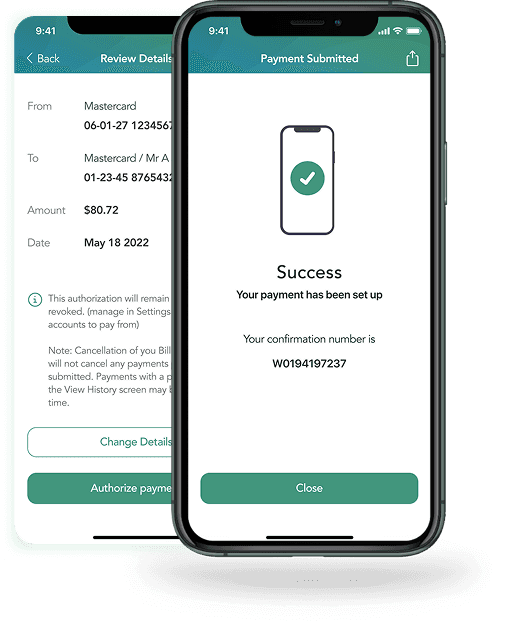
To further optimise the payment journey I introduced a number of solutions to reduce data entry and assist customers. Designed around a pre-payment summarised configuration flow – enabling setting and pre-population of payment accounts, defaulting to a recommended payment date, presenting payment schedules with earliest, active and due dates within the calendar view (helping avoid late fees), alongside quick selection of minimum and full balance payments – while additional automation to add and manage cards supported the primary needs of customers, helping to encourage and embed positive financial management through better informed choices. Each payment was actively recognised at the end of the flow, transforming a previously high-friction process into a moment for celebrating each positive step towards the customer’s financial objectives.


Outcomes & Impact
Due to the organisation being privately held specific performance metrics reside with the client, however the following reflects the outcomes of the programme to date:
The Experience Definition Strategy — crafting the human-centred, support first product vision — secured programme-level budget approval and executive sponsorship for the app transformation work stream and ongoing partnership.
During my time on the engagement, the client CSAT consistently rated us 10/10 across all criteria and stakeholders, recognising not only the improvements to the mobile apps but our deep partnership and support in realising a wider organisational transformation.
The programme success led to account growth, securing additional transformation engagements for the web properties.
Prior to transitioning the client across to the AMER based delivery teams I shaped the roadmap for multiple follow on releases, defining key features around card management, knowledge repository, account management and quick actions to enhance the core product experience.
Star ratings of 4.8 iOS (557k ratings) and 4.7 Android (251k ratings) maintained since launch are testament to strong strategic foundations.
Combined 800,000+ reviews across iOS and Android; 1M+ Android downloads — significant for niche subprime segment.
Organic user reviews praise the card's role in credit recovery following divorce, financial hardship, and thin credit histories.
Named "Most Innovative Financial Services Company in America" at the 2025 Experian Vision Awards for Excellence in Innovation.
The product vision and design influenced the concurrent internal marketing work streams, leading to the adoption of many elements across the web and digital properties.
Reflections
So often in financial services, human-centred design is a principle that doesn't survive contact with commercial reality. The instinct to protect revenue, manage risk and satisfy compliance rarely leaves room for the empathy that customers most need at their most vulnerable. What made this engagement genuinely different — and what I'm most proud of — was finding the conditions where both could coexist. Marrying the organisation's culture with the customer's reality produced not just a better product, but a more coherent business. That alignment, when you achieve it, is the most durable outcome design can deliver.
The leadership challenge I didn't fully anticipate was the cost of wearing so many hats simultaneously. I came in as Product Strategy and Design Lead. I ended up also functioning as Creative Director, design technical delivery consultant, and three-month interim BA — while building and leading a distributed team across time zones, pre-pandemic, before remote collaboration tooling had matured. The structures I put in place — async frameworks, Figma (and Miro) as the integration layer between client and project teams, a co-ownership culture where accountability was genuinely shared — worked. But I learned that distributed leadership requires more explicit investment in alignment than co-located teams, not because the people are less capable but because the cultural norms, ambient signals and important water cooler interactions outside of the project, that build trust in a shared office don't exist. I'd invest in that more deliberately from the start of any distributed engagement now.
What I'd do differently: I'd formalise the organisational change dimension of the engagement earlier and more explicitly. The shift from siloed decision-making to collaborative product ownership was as significant as any design decision we made — but it was framed as a means to an end rather than as a deliverable in its own right. Naming it, measuring it, and making it visible to senior leadership as a strategic outcome from the outset would have strengthened the case for the broader transformation work that followed.
